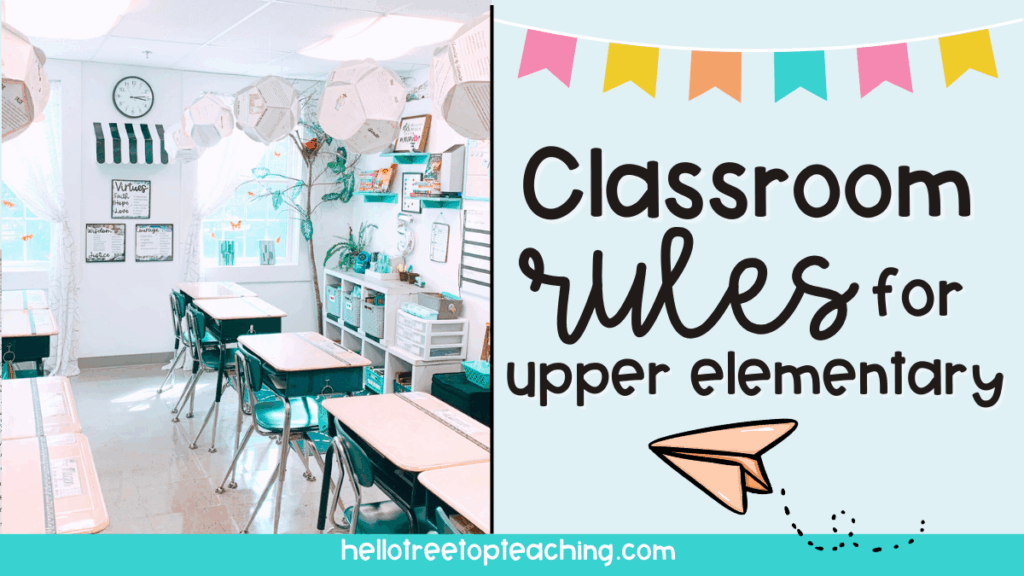
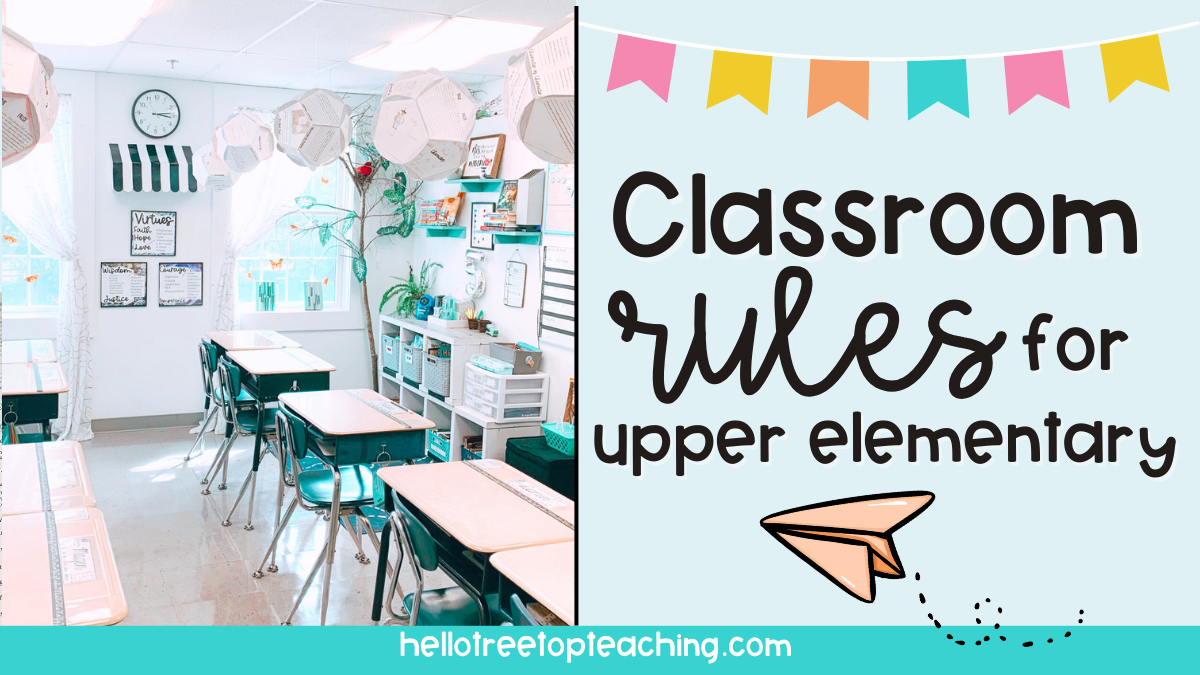
classroom rules for upper elementary with a picture of a elementary classroom and desks in rows

Classroom Rules for Upper Elementary

The first day of school is bound to include something that has to do with the classroom rules. This mundane activity is a laying the groundwork for hopefully a smooth classroom routine and therefore more learning in the long run. 

But what rules should you include? 

How can you get your students to want to follow the rules? 

What is the balance of authority and relationship needed for minimal classroom behaviors? 

Deciding Classroom Rules

A lot of people will give you a magic number of rules or tell you to only use positive language (i.e. avoid the word “don’t”), but honestly those aren’t near as important as the presentation and the enforcement. 

I actually only have one classroom rule!😬

It is easy to remember.

There are no loopholes (always tricky with upper elementary). 

It is easy to enforce. 

It makes students focused on how their actions affect others. 

My one rule is : Don’t cause a problem for anyone in our school. 

  • Talking during my teaching– How does this cause a problem for someone? 
  • Being loud/ running in the hallway– How does this cause a problem for someone? 
  • No caring for classroom supplies– How does this cause a problem for someone? 

Kids are naturally self-centered, it’s part of survival instincts and growing up. But the point of having rules is to create guidelines so that students can self-monitor their actions in a way that creates a positive learning environment. 

This one rules leads to CONSTANT conversations about being others-centered. It causes a real change in students who struggle to choose what is right. This is a training of the brain. 

This system focuses less on the the specific rules and more one the WHY of the rules. 

So regardless of how many rules you choose, spend time in the first month of school talking about the WHY of the rules you chose. 

Getting Students to Follow the Rules

There is a somewhat new trend going around where teacher allow students to come up with the classroom together. They claim that this gives the students more buy-in to actually follow the rules. 

But let me tell you why that isn’t true. 
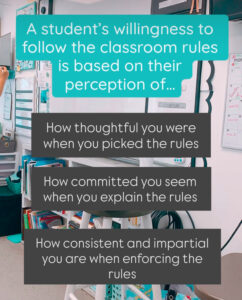
what makes students willing to follow the rules with three tips for teachers

What children need and want is a teacher who they know can make decisions about what is best for them. This creates safety and security when they know the person in authority is taking care of things.  They need their teacher to be an adult and not a friend. 

When you take a task meant for an adult and give it to the students to choose, you are telling them that you don’t know what rules to choose and they should have some of the authority. Both of these things are a problem. Everything gets all topsy-turvey in the brain as they try to order the world. 

When the teacher loses his/her authority, the children don’t see him/her as someone worth listening to. Classrooms without a clear authority are chaos. 

Being the authority doesn’t mean you are stuffy or cold or lacking all joy/fun. In fact, there is actually more room for fun because the boundaries are firm. The fun is actually fun and not out of control.

Students have friends. Students have parents. What they need from you is a teacher. They need you to know and be in charge; they need to focus on being a kid and not filling in the gaps from an adult who “needs their help”. 

When you embrace this authority and pair it with authentic relationships, you will have a smooth classroom of students who behave and thrive academically because they can fully focus on just being a student.  

How to Present the Classroom Rules

So if I want students to want to follow the rules, how do I start the year? We have no relationship yet, but I want to help them get a sense of how our classroom should and will function. 

Presenting the rules in upper elementary is going to get some eye-rolls because they think they have heard all possible classroom rules before. This is why I love the shock of one rule. 

But the best way to get students to the WHY of the rules is to ask them these questions? 

  • What might be a behavior that causes a problem in our classroom? 
  • Who does it cause a problem for? 
  • Why is that a problem? 
  • If this happens, how can we make it right? 

If you are trying to foster a conversation and the students just keep saying, “I don’t know”, you’ll want to read this post and grab the freebie about other things to say besides “I don’t know”. 
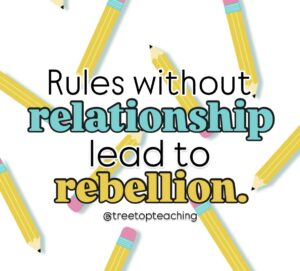
rules without relationship lead to rebellion with pencils in the background

I am telling the rule. I am giving the consequence. I am the adult and I embrace the authority, allowing them to just be children as they grow and discover what is right and wrong. 

But I am not cold. I am reasonable and logical, inviting students into a conversation about the rules(s) I’ve chosen. And in these reflections and conversations, I am showing them that I care for them. Following this rules will create the best environment for them to learn- this is true care. 

What is most popular around here...

Leave a Reply

Your email address will not be published. Required fields are marked *

I help upper elementary teachers like you engage their students with meaningful lessons and ideas without having to spend a lot of time or money.

Learn more about me and how I can help you here.

Hi, I'm Lauren!

I help upper elementary teachers like you engage their students with meaningful lessons and ideas without having to spend a lot of time or money.

Learn more about me and how I can help you here.

Let's Connect!

Get The 5 Steps to Helping Your Students Master the 8 Parts of Speech

Some of the links on this site are affiliate links. This means that at zero cost to you, I will earn an affiliate commission if you click through the link and finalize the purchase.

classroom rules for upper elementary with a picture of a elementary classroom and desks in rows